

Introduction
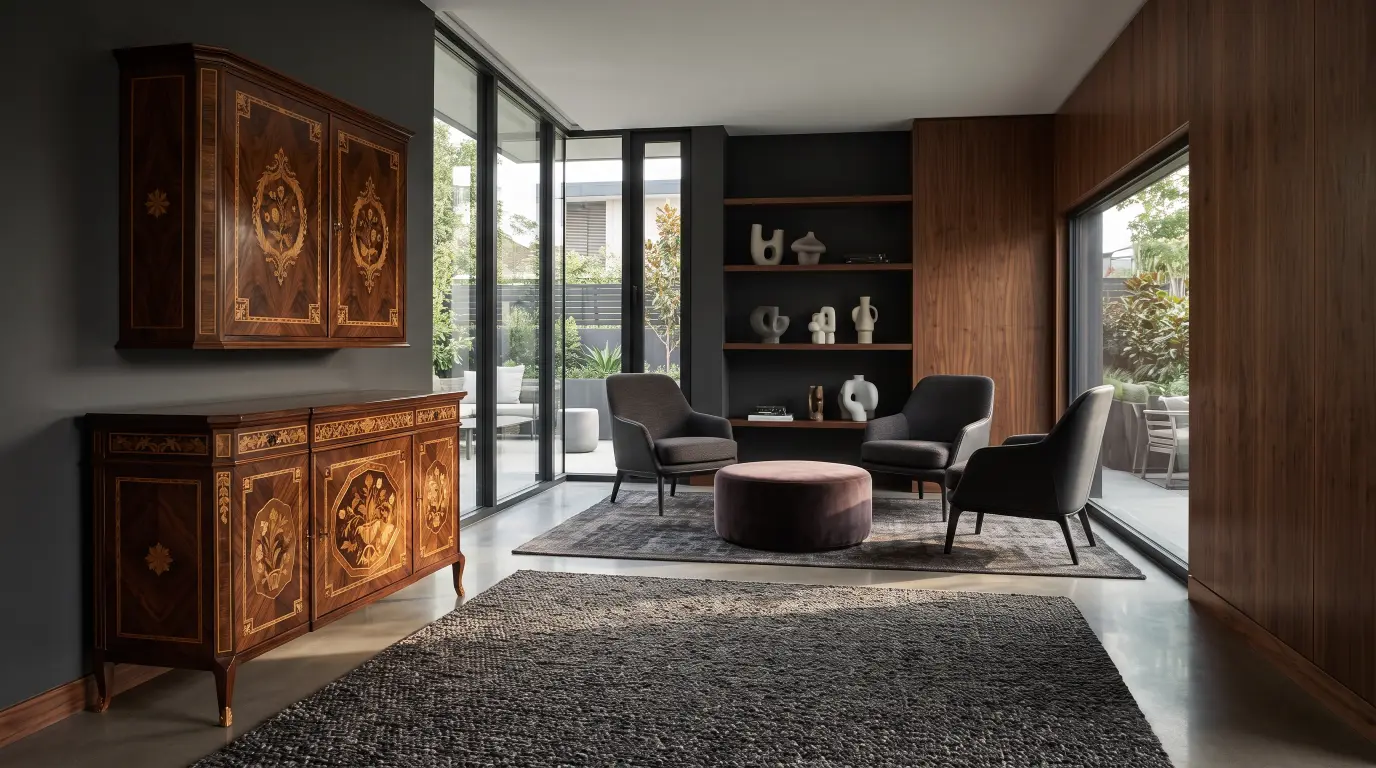
Marquetry is a woodworking technique that transforms furniture into works of art. This intricate craft involves piecing together small bits of wood, veneers, or other materials to create detailed patterns and images on the furniture’s surface. From stunning floral designs to geometric patterns, marquetry brings a personalized touch that’s difficult to achieve with plain finishes.
Whether you prefer classic designs or lean toward modern minimalism, marquetry offers options that suit varied tastes and decors. Its ability to incorporate a wide range of materials—from natural woods to dyed veneers—makes it adaptable and versatile, perfect for crafting furniture that stands out. As we delve deeper, we’ll explore how marquetry can make your furniture both functional and fabulously unique.
Understanding Marquetry and Its Role in Furniture Design
Marquetry is a captivating element in furniture design, allowing artisans to showcase their creativity through intricate patterns and vivid imagery. This technique involves the precise arrangement of small pieces of wood, veneers, and sometimes alternative materials like mother of pearl to create stunning visuals on furniture surfaces. Historically, marquetry has been employed in everything from elegant dining tables to ornate cabinets, highlighting its timeless appeal.
In contemporary furniture design, marquetry elevates both residential and commercial spaces. By integrating custom designs, marquetry allows furniture to reflect personal stories or specific cultural motifs, transforming ordinary pieces into conversation starters. The artistry involved in marquetry makes each piece valuable, telling a unique story meticulously crafted by skilled hands.
This art form also offers practical benefits. Marquetry uses veneers instead of solid wood to reduce furniture weight without compromising structural integrity, making pieces easier to handle and transport. Furthermore, using multiple materials in marquetry can be more sustainable, as it often utilizes smaller wood pieces that might otherwise be discarded. Combining aesthetic and practical advantages makes marquetry a favored choice for those seeking distinctive, enduring decor.
Techniques and Materials Used in Marquetry
Creating marquetry involves several techniques varying in complexity and style. The most common is the "piece-by-piece" approach, where each element is individually cut and fitted to form the desired pattern. Craftsmen employ precision tools like fret saws or laser cutters to achieve clean, intricate designs. Another popular technique is "boulle work," named after André-Charles Boulle, a French cabinet maker. It uses brass, tortoiseshell, and other exotic materials—often laminated—to form elaborate designs.
Various materials enhance the beauty of marquetry. Popular choices include natural and dyed veneers like Legno Quattro, which provide multiple colors and grain patterns. Reconstituted veneers such as Alpi offer uniformity and predictability, ensuring consistency in large projects. Artisans might also incorporate mother of pearl or metal accents for added elegance, creating shimmering effects that catch the eye.
To execute these techniques successfully, artisans must pay close attention during the inlay process. Properly inlaying each piece ensures the final design is smooth, durable, and artfully executed. Precision and patience are essential, and using high-quality adhesives like Duroxil Glue is crucial for securing each piece firmly in place.
By understanding the techniques and materials of marquetry, one can appreciate the skill required and its potential impact on furniture design. Marquetry adds a distinct touch that enhances both form and function, whether as a simple decorative element or a complex scene that transforms furniture into a focal point.
Enhancing Aesthetics: How Marquetry Transforms Furniture
Marquetry isn’t just about functionality—it transforms furniture into art. This craft allows pieces to tell stories and display artistry carefully woven into their construction. With marquetry, a simple table or cabinet becomes a visually appealing masterpiece that draws attention and admiration.
One key enhancement marquetry offers is visual depth. By incorporating different colors and grains of natural veneer, furniture gains a rich, textured appearance that changes with light and viewing angle. This dynamic quality brings a room to life, making the furniture interactive and engaging.
Furthermore, marquetry enables personalization. Whether you choose intricate floral patterns or bold geometric designs, marquetry lets you express your personality through custom motifs. The individuality of each piece makes it stand out in any setting.
Marquetry also gives the illusion of luxury. Integrating materials like mother of pearl or polished metal allows even modest furniture to exude opulence. These touches elevate your home or office aesthetic without major remodeling or expense.
In summary, marquetry transforms furniture into more than functional items. It adds character and style, enriching any space and providing a focal point that captures admiration.
Choosing the Right Marquetry for Your Style and Needs
Selecting the perfect marquetry for your furniture involves understanding your personal style and how it fits your space. With so many options, choosing can seem overwhelming, but a few simple steps can simplify the process.
First, consider your room’s overall aesthetic. Do you prefer minimalist style, or lean toward something more traditional? For modern spaces, geometric patterns with sharp lines might suit best. Intricate floral designs or classic wood patterns may work better for vintage or traditional themes.
Next, think about materials. Dyed veneers like Legno Quattro add vibrant hues to modern designs, while reconstituted veneers like Alpi offer consistent patterns for a cohesive look. If you want a bit of shimmer, materials like mother of pearl add glamour.
Also, consider the furniture’s purpose. Is the piece a central focal point, or a subtle accent? A centerpiece might require bold, eye-catching designs, whereas softer tones may suit complementary items.
Finally, evaluate durability and maintenance. Some veneers require more care than others, so make sure your choice fits your lifestyle and upkeep preferences.
By assessing these factors, you can choose marquetry that aligns with your vision and enhances your living space with beautiful, functional design.
Conclusion
Exploring marquetry opens a world of possibilities to add style and sophistication to your furniture. This art form offers numerous applications, from intricate designs to practical embellishments that make your furniture uniquely yours. Whether you want to bring a touch of history into your home or add modern flair, marquetry provides the tools to achieve your desired look.
To discover more about how marquetry can enhance your home, visit Chabros. As a leading , Chabros has the materials and expertise to help you create beautiful furniture that reflect your style. Check their offerings to start your journey into the exquisite world of marquetry.